
Successful Guerilla Marketing Campaigns

Guerilla marketing involves high energy and imagination with a focus on grasping the attention of the public at a personal and memorable level. Guerilla marketing stands out. These concepts think outside the box – but what truly distinguishes guerrilla marketing from mere public stunts is cost-effectiveness. Jay Conrad Levinson – the man who coined the phrase “guerilla marketing” – says that it “works because it’s simple to appreciate, easy to execute and inexpensive.” It’s all about using existing resources (and some wild imagination) to engage with audiences en masse and make a bold statement.

1 Double Robotics Lucy the Robot

The Sydney queues for the launch of the iPhone 6 contained hundreds of people. And one robot. Tech company Double Robotics sent Lucy the Robot the store, amidst their Asia-Pacific telepresence robot launch, aiming to help businesses understand what robots could do for them.

Play Video

The campaign was covered in more than 4,000 news pieces that were translated across 32 languages for a reach of over 132 million in days. This media value was in the tens of millions of dollars, and resulted in more than 12,400 inquiries in three days – for a marketing outlay of next to nothing.

2 Tinder
Tinder acquired more than 50 million users through word-of-mouth alone, but the early customer acquisition success can be attributed to a very simple, inexpensive and out-of-the-box idea. The Tinder creators personally invited friends to download the app, then visited the best “party colleges” and got attractive, influential figures on board – focusing on a female user base, and the app took off.

3 Coke Hug Me

Play Video

Coca Cola is a brand with a product so iconic, the majority of advertising campaigns are centred around brand perception and engagement with the brand. Coca Cola Singapore created an experiential marketing campaign as part of the wider “Open Happiness” initiative, in which a Coke vending machine was installed at the National University Singapore with only a dispenser and the words HUG ME. Students hugged the vending machine, which dispensed a can of cola.

“Whether you were hugging the machine or experiencing the event online, our goal was the same – to put a smile on your face and share that emotional connection,” Coca-Cola Company spokesman Leonardo O’Grady said in the release. “Reactions were amazing… people really had fun with it and at one point we had four to five people hugging the machine at the same time as well as each other!”

4 Mastercard Priceless Surprises

Here at DOTF, we were lucky enough to work on this awesome campaign that took the festival experience of lucky Mastercard customers at FutureMusic to a whole other level.

Starting from the Mastercard Express entrance, all Mastercard owners had to do was show their card at the gate for a VIP wristband which offered exclusive access to lounges and chill-out areas, free drinks, premium viewing platforms – and for some lucky attendees – a helicopter ride or a backstage meet and greet with festival headlining performers.

Whilst young people normally continue with whatever bank their parents had, Mastercard showed this fairly indifferent market segment the benefits of Mastercard over its immediate competitor, Visa.

Play Video

5 WePay Paypal Freeze Your Accounts

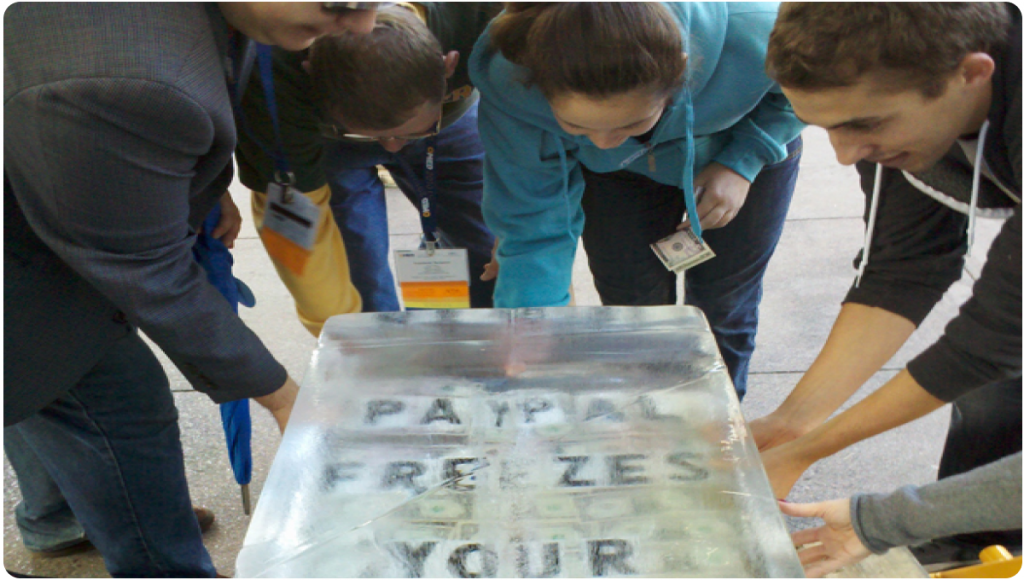
Using negative marking can be a bit of a risk, but WePay took this risk by capitalising on competitor PayPal’s habit of freezing its members accounts, by leaving a block of ice filled with cash outside the PayPal conference in San Francisco. The stunt was on the front page of tech news sites in an hour.

The risk paid off. Despite the action at a single location, the amount of global online coverage led to some truly impressive gains, including a 300% increase in weekly traffic and a massive 225% increase in account sign-ups.
6 Adidas x Fashion 5 Ways Falcon W

Not all guerrilla marketing has to be real world stunts, as proven by the use of Snapchat – as pop-up sneaker store. Adidas launched the Falcon W through a Snapchat show Fashion 5 Ways, with viewers able to purchase the shoe through the app, supported by Shopify.

Whilst we’re now used to the shop functions embedded in Instagram and Snapchat – in 2018, this was absolutely unprecedented.

The stock sold out in six hours, with millions of viewers, 70% of which were from the 13-24 demographic, showing that the digital native generation are happy to engage with platforms that bridge the gap between content and commerce.

7 Village Roadshow IT

One of our personal favourites, the East Coast capitals got a nice dose of creepy clown time, when Village Roadshow were promoting the 2017 remake of IT.
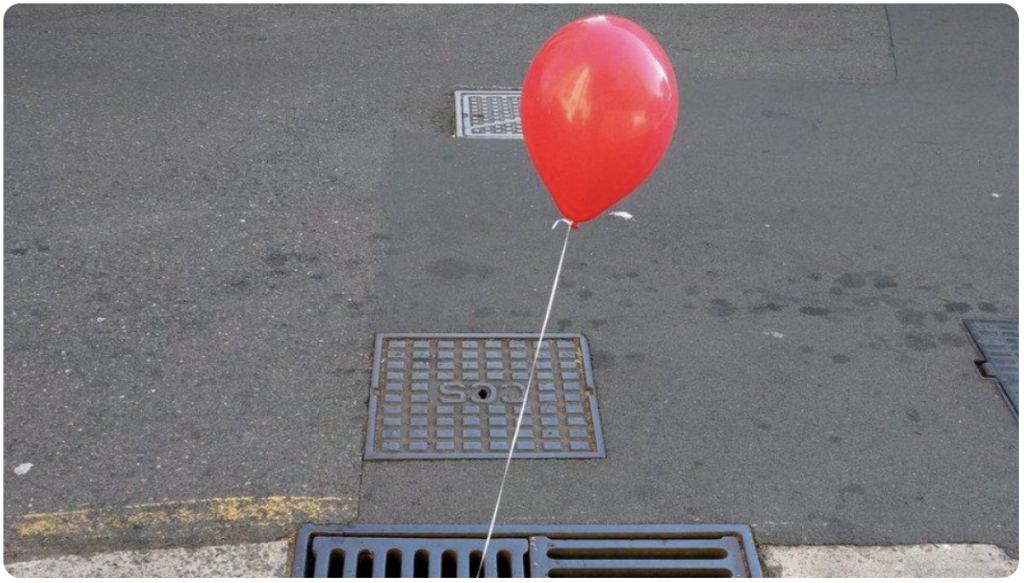
For little more than the cost of some stencils, string and balloons, the campaign centred around the #ITmovie, providing not only a place to gain information about the film, but also a place for user-generated content to collect. Drain locations right in the middle of the Sydney, Brisbane and Melbourne CBDs provided cheap exposure and social media shares, for far less than the price of traditional outdoor advertising in a similar space.

The Future Of VR Marketing

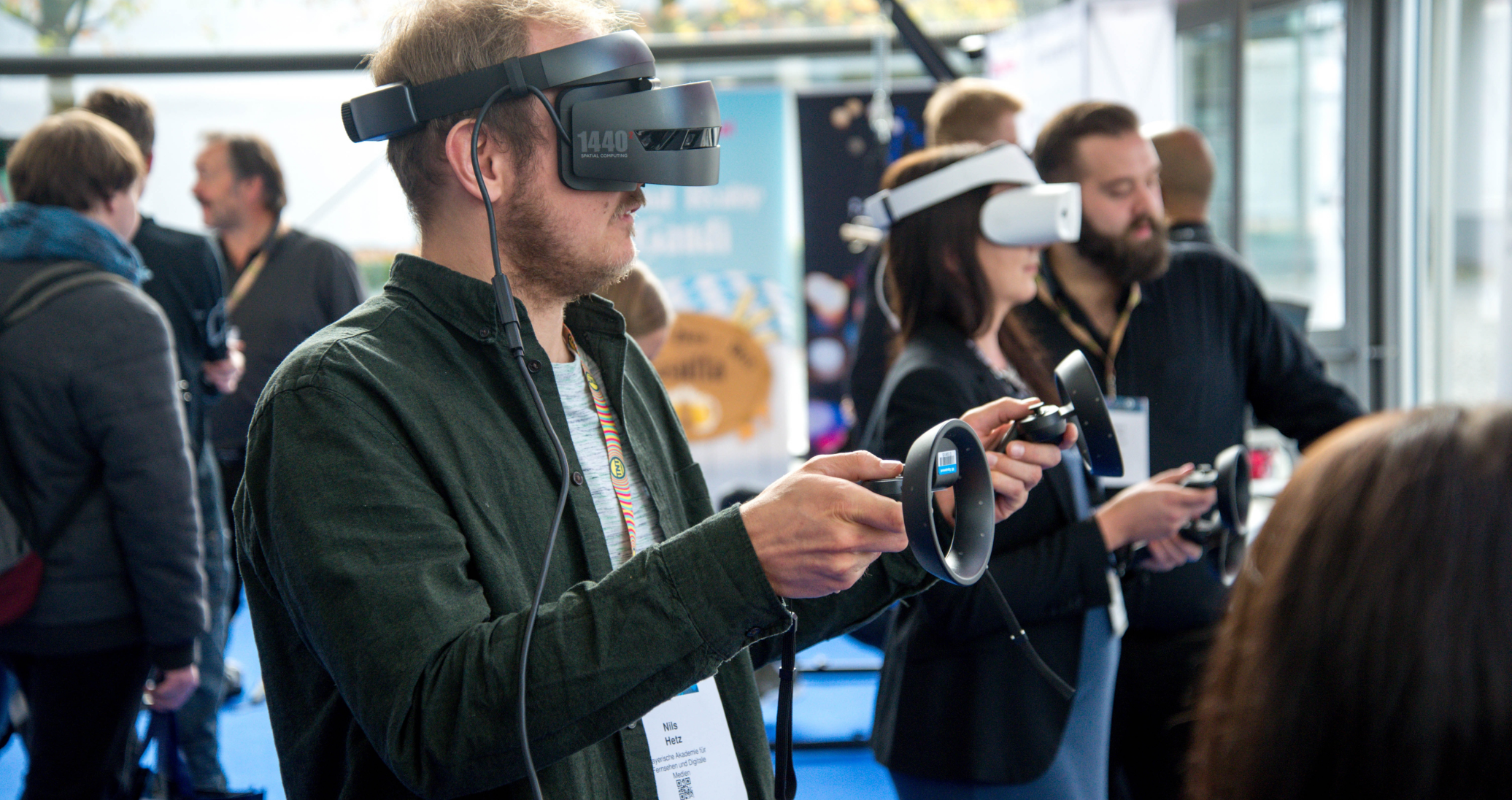
There is no doubt that virtual reality is taking over the world. It’s predicted that 43. 5 million VR headsets will be sold by 2025, serving a market that’s projected to reach a value of $5.3 billion by 2023.

Virtual reality (VR) is a combination of interactive software and hardware that immerses you in a digitally simulated experience. In a business sense, VR allows consumers to get a true feel of the brand and product without actually committing to buying it – and helps the brand stand out from the crowd with future-facing appeal.

By 2015, 75% of the Forbes World’s Most Valuable Brands created VR projects for their customers or employees. From food to cars, hotels to universities, VR is an interactive, interesting and fun way to engage customers – particularly during the pandemic era.

But even before we were isolated by COVID-19, VR projects were growing in popularity across major brands. In 2016, IKEA launched their VR kitchen experience, allowing customers to virtually explore and remodel their kitchen. Users could adjust their height to view the environment from a child or adult’s perspective, interact with the IKEA furniture and appliances and even cook the iconic IKEA meatballs.

“Though gaming is at the heart of virtual reality, it is clear that the technology’s non-gaming potential applications are massive as well,” gaming website Gamespot said.

“Being able to virtually shop for IKEA furniture is just one example”.

In a similar way, the American home improvement store Lowe’s incorporates a ‘Holoroom How To’, a VR tool that helps teach customers how to do DIY projects. Not only is it a fun activity where you virtually paint walls or tile floors, but it is a memorable, almost-gamified experience that demonstrates best practice in how to use the store’s products.

Other interesting innovations with VR technology include Topshop, who used virtual reality to provide a catwalk experience from London Fashion Week, and later won an Event Technology award for Best Virtual Event. Audi claimed to have launched the world’s first VR system in the automotive retail industry in 2016, allowing customers to have a very realistic experience exploring the individually configured cars. The Marriott Hotels had a similar experience called ‘The Teleporter’, where users were virtually transported to various locations around the world to showcase that the Marriott is global and will always be there for you.

In terms of storytelling, New Zealand’s Fire and Emergency released a 360 VR video where users experienced what a real house fire is like. The video featured facts and tips about how to prevent fires, while also incorporating strong sounds and visuals of a real emergency situation.

Even educational institutions have integrated VR into their campaigns. While recruiting students, New York University sent future engineering students a cardboard VR device to experience a virtual tour of Mars. Not only did the VR showcase how NYU stands out from other schools, but the tour illustrates the skills and experiences that potential students could have at the university.

The applications of VR for brands are endless – because it can literally make anything happen. As we recover from COVID-19, finding ways to be together and have experiences safely are essential to our communities and our mental health. The true potential for VR is only just beginning to be realised.

The Value Of Ethical Content Creation

In the era of ‘fake news’, the trustworthiness of the media is being increasingly scrutinised. Thanks to online ‘call out’ culture, protecting your audience from upset isn’t just a moral obligation – it’s a practical one. Countless businesses have been damaged by tone-deaf, misleading, or intrusive marketing campaigns. Don’t make these same mistakes! Below we unpack the key values that underpin ethical content creation.

Social Awareness

In today’s media landscape, socially insensitive marketing gaffes can bring down a strong brand. Ensure your campaigns are socially aware: don’t fall out of touch with public debates, make sure your approach is sensitive and informed, ask yourself, ‘what message is this sending?’, consult experts and most importantly – make sure your creative team is diverse, so you get a range of perspectives on social issues.

Consent

Remember that time a U2 album randomly popped up on everybody’s iTunes and people were furious about it? People don’t like it when their personal space is invaded. That principle extends to email inboxes, phones, and other platforms for personal communication. Don’t directly send people unsolicited content. The Australian government has strict spam rules that apply to emails, texts and instant messages; advertising messages can only be sent with the permission of the recipient.

Honesty

Dishonesty can be costly. In 2011, consumers sued New Balance for making false claims about the brand’s truebalance toning sneaker. New Balance claimed the shoes increased muscle activation and calorie burning – a claim that didn’t stand up to research. New Balance ended up settling the case for a reported $2.3 million. Don’t make false claims – it’s not worth it!

Fairness

Fairness extends to the availability of items for marginalised groups. Lots of brands are taking steps in the right direction by making their products more widely available – clothing retailers are increasingly producing plus size ranges, for example. This inclusivity should extend to your content creation – it shows that your brand is tuned in to the needs of its consumers. It’s easy to make content accessible (and accessibility modifications such as captions, audio description and light sensitivity testing are all services offered by DOTF) – check out the AAA accessibility guidelines to find out how to make your content inclusive to all.

Emotional Integrity

If your content is geared to elicit a strong emotional response from an audience, make sure it’s on brand. Ensure the narrative is strong and believable. When brands present their products as solutions to intractable social problems – like racism, or the loss of a parent – they risk seeming shallow, or worse, manipulative. Create content with emotional integrity – and respect the emotional sensitivities of your audience.

Ethical content creation isn’t difficult – it just requires a little mindfulness, and a healthy dose of respect for consumers. Keep these five values at the core of your marketing strategy, and you’ll be sure to keep audiences onside.

Tips On Posting On Instagram For Businesses

Brand’s relationship with Instagram goes further than announcing that you had avocado on toast for your breakfast.

After all, with over 800 million users on this app, Instagram has become the unofficial launching pad for many marketing campaigns. Ranging from small startups to independent retail shops to billion dollar chain companies; the idea of reaching thousands and thousands of people within a short amount of time is a PR dream come true. So, it’s extremely important that your account shows off a sense of identity your company encompasses.

In another sense, your businesses’ Instagram account needs to be an unofficial branding tool.

Aesthetic

People are drawn to pretty things so it should be no surprise that Instagram is all about how good your grid looks. No one likes looking at a jumbled collection of mess with no clear direction on colour scheme or quality of photos. Depending on your business, whether it is a brand seeking to build greater recognition, or a small private college seeking to enhance student enrolment, or an upcoming local rugby event wanting to boost ticket sales: your aesthetic needs to reflect your identity.

If you’re an upscale minimalist furniture shop that specialises in avant-garde designs, your photos should reflect that: no bubble gum filters and no oversaturated photos.

If you’re managing a local primary school, don’t be hesitant to post ecstatically happy children hopping around in a playground (with their parent’s permission of course).

If you’re still a bit lost, I suggest that after every photo, you should always ask yourself one question: does it encapsulate my brand? Any doubt should lead your finger to the delete button.

Behind the Scenes

It might be weird, thinking that brands would need to show their working process. I bet you’re thinking: But why would people care?

If that’s your line of thinking then you haven’t really encapsulated a true marketing mindset. Your job isn’t only to cater to the interest of your customers, you need to learn to cultivate their attention.

As businesses, whether large or small, private or public, corporate, people are interested in the behind the scenes operations because business accounts are so obviously perfectly fabricated PR and marketing efforts; that by allowing your customers a glimpse into something as mundane as a behind the scene photoshoot, or a business meeting, or a team meeting within an office: it humanises your organisation. It peels away the smokescreen of manufactured targeted advertisement and instead, creates a sense of trust.

People trust what they can understand and by allowing them a glimpse into the inner workings creates a feeling of greater transparency and a more positive brand opinion. But of course, these behind the scenes shots are fabricated in a sense as well: so realism is key.

Hashtags

The famous #hashtag trend is also extremely useful for trying to garner attention to the right group of people. Anyone from models to photographers to an everyday uni student uses it, and so should you.

Creating your own hashtag only works if you have a huge following that is also deep in the hashtag game, so if you’re keen on having your own brand identity being explored and tagged as an individual. Utilize it on almost any post you have- from your Instagram stories to your promotions to your comments. Once it gains traction from other people, you’d be surprised how many visits you can get from the Instagram community.

If that sounds too complicated: fear not. Instagram has a trove of existing trending hashtags, just choose the ones that fit well and chuck it here and there.

Remember: the key is to place it in the comment and not as a caption: it gets extremely annoying and might even turn audiences away because of how many words they have to scroll through.

VidCon Australia 2017 – Should Brands Make Their Own Content?

In early September, the Melbourne Convention Centre was packed with thousands of people with one thing on their minds – online video.

VidCon started in 2010, in Anaheim, California, and has grown into the world’s largest event about online video, drawing over 30,000 people to each conference. The event is a global phenomenon, with conferences in the United States and Europe, and exists at the centre of the online video revolution, bringing together industry leaders, creatives and the wider community to discuss and define the fastest growing medium in the world.

Our Managing and Creative Director, Ivan Gomez, had the pleasure of moderating a panel at VidCon Australia, focusing on answering the question: “Should Brands Make Their Own Content?”

The answer from the panel was an overwhelming “Yes!”, but with some caveats on doing this effectively. Below are some of the insights from the day, with some tips on going into content creation as a brand.

Do both.

Steve Crombie, the CEO of Totem, suggested that brands should absolutely make their own content – but they should know when to outsource as well.

“Brands should definitely create content in-house – but that depends on how much money you’ve got, and how much content you can create. There are different ways to create, professionally created content can be expensive, but worth it. They should do both. “

Have a solid strategy.

Similarly, Emotive’s Social Media Director, Jack Crick suggested that brands making content should have a “publisher like mentality”.

“Bigger brand moments should be outsourced, but for lower level content, it could definitely be done in house – if you have the right strategies, and people who really understand the audience that you’re trying to reach. “

Ensure quality control.

Understanding your audience’s expectations was the top tip given by Broad’s Head of Strategy, Lauren Joyce.

“It comes down to what your consumers are expecting from you. Understanding your audience, and understanding what quality of content they expect from you, and then delivering on that, and doing it consistently, so that when they come back to your content publishing platform, they’re actually seeing something that they’re expecting to get, and you’re surprising them through the stories that you’re telling. “

Creativity is king.

It’s not about the gear, it’s what you do with it. This was the sentiment expressed by Joke Theory’s all-rounder Cisco Corea.

“ was probably worth about $100 000 about five years ago. The kind of content you can produce on your phone in the right hands with the right skills, can definitely be done by in-house staff. But it’s not the technology that matters, it’s actually the creativity. Because if that creativity is not there, it just becomes irrelevant. It doesn’t hit the mark. “

Understand your audience and understand content.

Here at Department of the Future, we believe that brands can – and should – definitely make content inhouse, but to always remember that the audience is number one.

As Ivan said at VidCon: “Understanding how you can build teams to make content is the most important thing – video needs to be front and centre from the beginning when brands are looking into content creation. Another important aspect is distribution – because distribution dictates the tone. Ultimately, it’s about having someone in a team that understands the process – how content behaves.”

Play Video